Chasm and Fan Traps
Last updated: June 21, 2026
| Tier | Deployment |
|
|
|
Note:
The images on this page were taken in the desktop version of Sisense. However, the same principles described on this page also apply to the web-based ElastiCube Manager.
Chasm and fan traps should be avoided when building your ElastiCube schemas.
Chasm Traps
A chasm trap occurs when two many-to-one joins converge on a single table, and the query includes measures from both leaf tables. As a result multiple rows are returned from the tables when processing the query.
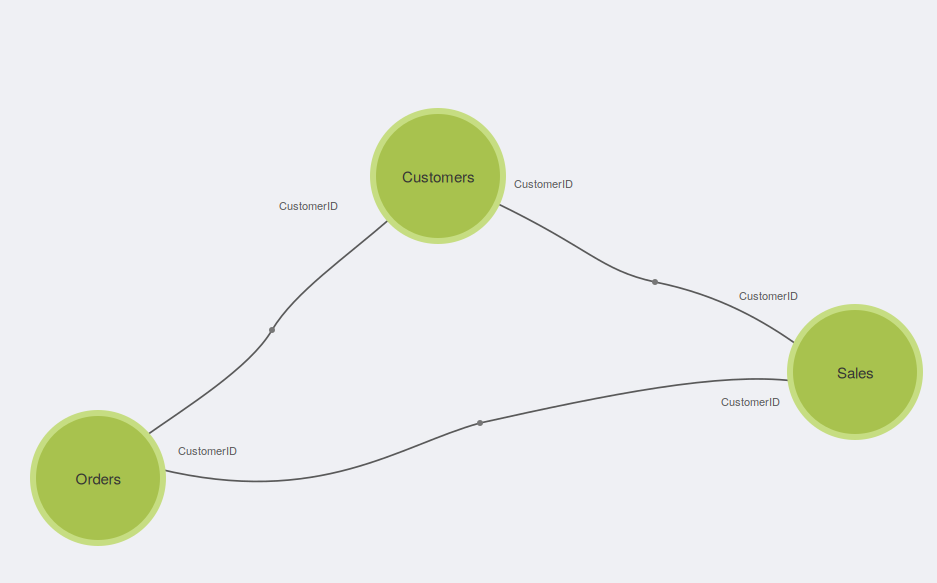
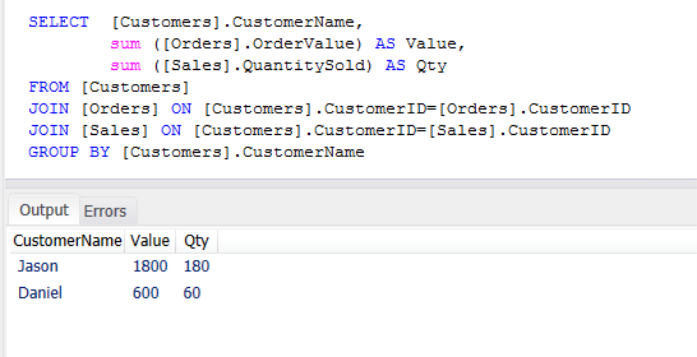
If you were to calculate both measures (Qty and Value) simultaneously, like in the following example, the values for Customers will be multiplied due to the inner join between the leaf tables, and the results may be incorrect:
Fan Traps
A fan trap occurs when two many-to-one joins follow one another in primary-detail form (OrderDetails), and the query includes a measure from both the leaf table (OrderDetails) and its immediate primary (Orders).
If you try to aggregate both measures simultaneously (using the query below), you will probably get incorrect results:
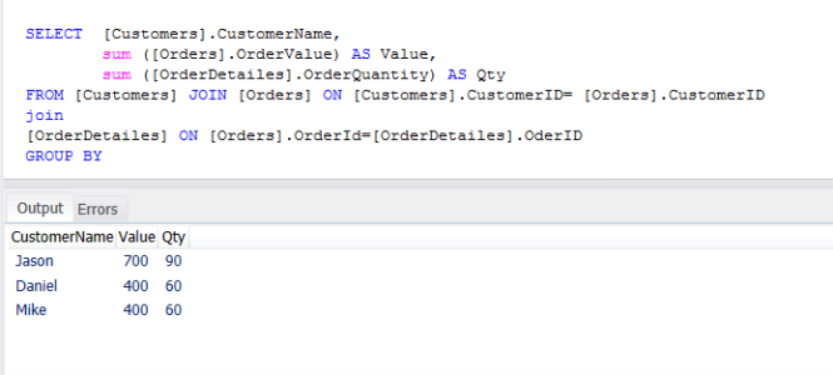
The Qty measure, corresponding to the leaf measure table (OrderDetails) is calculated correctly, but the Value measure, corresponding to the measure held in its primary (Orders), is not. This is because we get the Value of every OrderID, which may inflate the expected results.
The web application translation module separates the calculations, and unions the results by generating a query for each of the measures' paths (path in terms of tables to go by). Then the web application translation module will group all the measures with the same tables' paths into one query and union it with all the other same path measures with different paths.
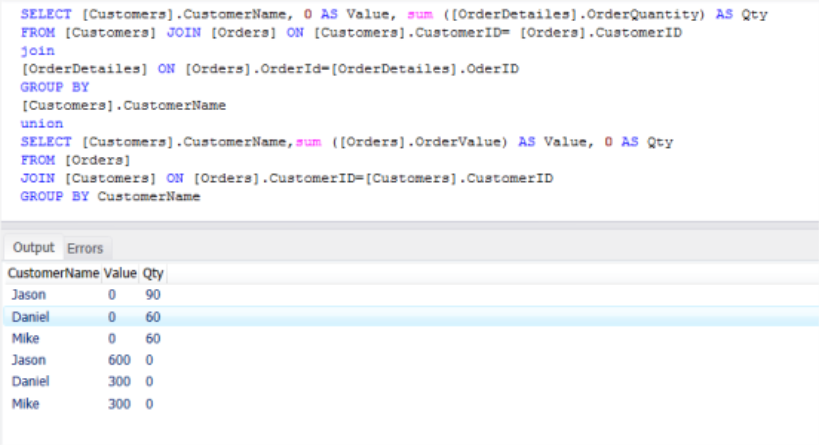
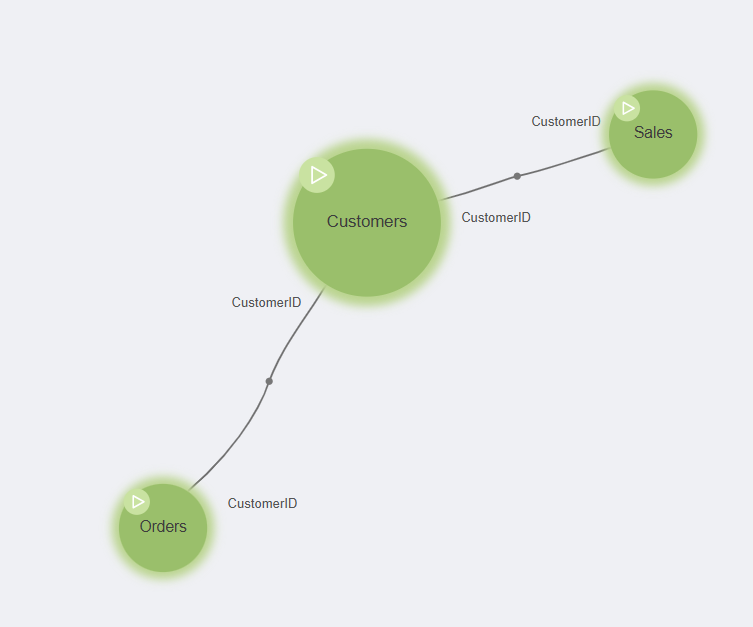
The described Chasm Trap can be prevented like this:
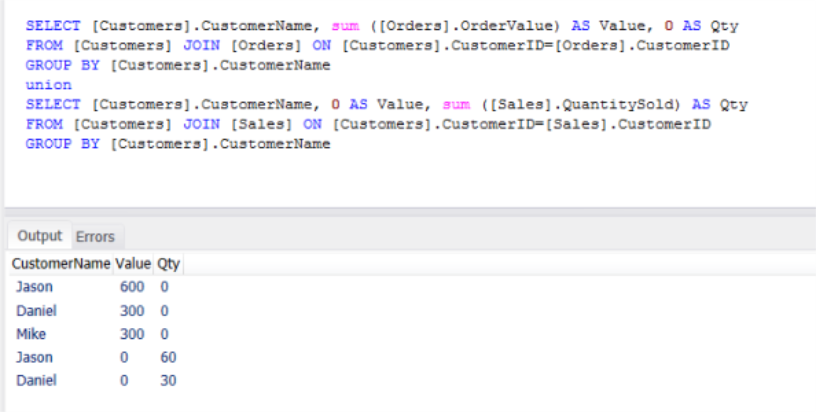
And the Fan Trap will be prevented this way: